
Vice
Working on JPMorgan’s 100 years in Hong Kong campaign was one exciting ride. From the very first meeting, there was a feeling in the room that this couldn’t just be another corporate milestone piece. A hundred years is more than a statistic, it’s a story that stretches across generations, across moments of transformation, and across the changing identity of a city that never stands still. We quickly agreed that if we were going to tell this story properly, it had to be a true celebration of Hong Kong itself.
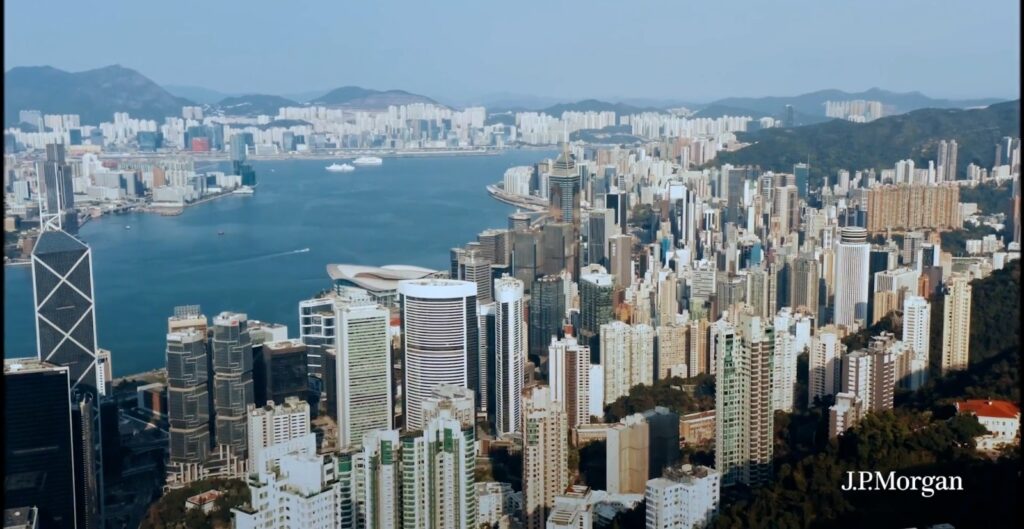
For a century, JPMorgan has been part of the rhythm of Hong Kong. Not always loudly, not always visibly, but consistently helping shape the financial infrastructure, supporting businesses, and contributing to the city’s rise as one of the world’s great economic centres. The truth is, many people walking through the streets of Hong Kong every day have no idea how deeply the company’s presence is woven into the city’s development. That hidden influence felt like something worth spotlighting.
So rather than creating a campaign that simply talked about a bank, we set out to create something that celebrated a city and its progress over the last century.
Hong Kong is a place that almost feels mythical when you step back and consider its story. In the span of just over a century, it has evolved from a modest fishing village into one of the most recognizable skylines on the planet, a dense, vertical symbol of ambition, trade, resilience, and reinvention. Today it proudly carries the title of “Asia’s World City,” but that transformation didn’t happen overnight. It was built through decades of movement, commerce, migration, innovation, and relentless energy.
And in many ways, the timeline of JPMorgan in Hong Kong runs parallel to the timeline of the city itself.
One of the most inspiring aspects of this project was the trust the team at JPMorgan placed in us. From the outset, they gave us genuine creative freedom to explore the story and shape the campaign in a way that felt authentic and cinematic. That kind of trust is rare, and it makes an enormous difference. It meant we weren’t constrained by rigid corporate storytelling frameworks, instead, we could approach the city with curiosity, creativity, and a sense of discovery.
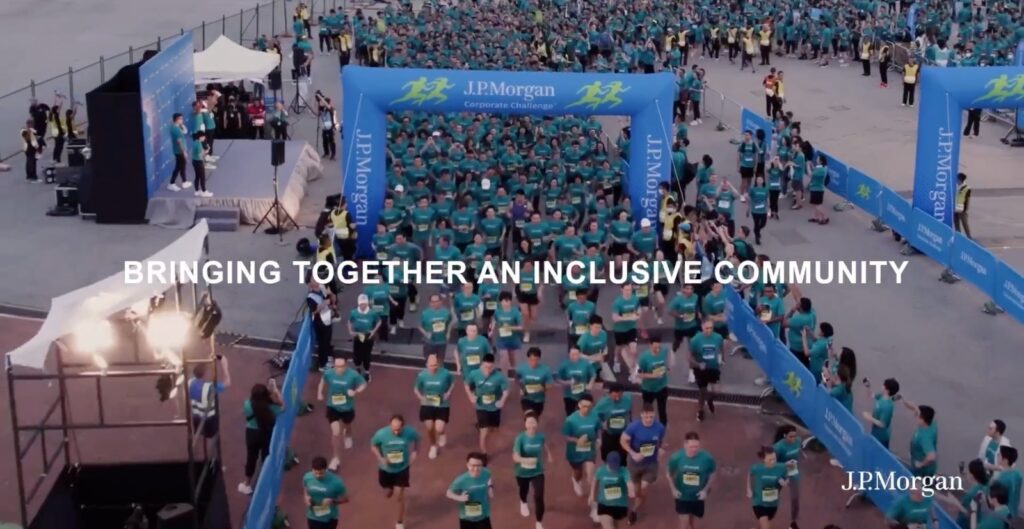
That freedom pushed us to explore Hong Kong in ways we hadn’t imagined before from re-visiting the skyscrapers in Central and Wan Chai with a different lens to looking at the growth in the corners of the city.
At the centre of the campaign sat the hero film. Everything revolved around getting this piece right. If the film worked, the entire campaign would have a heartbeat.
JPMorgan’s brand philosophy is very much about showing rather than telling, and we leaned heavily into that idea. Instead of relying on heavy narration or long explanations, we wanted the visuals to carry the emotion. The city itself would be our storyteller.
To structure the narrative, we broke the film into three chapters: the past, the present, and the future.
Each chapter needed its own tone, its own visual language, and its own emotional weight, but together they had to feel like a continuous journey.
We began with history.
JPMorgan opened its first office in Hong Kong in 1924, which meant we were reaching back more than a century to capture the starting point of the story. Finding moving footage from that era proved to be a real challenge, so we went deep into archival research. We combed through Hong Kong archives, historical collections, and internal company materials to find imagery that could transport viewers back to those early days.
In some cases, photographs became our most powerful storytelling tool.
Those early images, harbour scenes, trading houses, crowded docks, narrow streets lined with shop signs, carry a quiet magic. They capture a Hong Kong that feels distant and familiar at the same time. A city on the edge of transformation.
To bring this material to life, we developed a visual style inspired by old newspaper layouts and archival prints. Photographs were layered like clippings, animated gently into frame, and paired with subtle motion graphics. The pacing and transitions were designed to evoke the feeling of an old projector flickering to life, the kind you might find in a dusty archive room.
As the film opens, it almost feels like you’re stepping into a time capsule.
You see fragments of a city beginning to take shape. The harbour, the people, the trade routes, the buildings slowly rising. And within that timeline, JPMorgan appears not as a narrator but as a participant, quietly present as Hong Kong evolves.
From there, we transition into the present.
This section shifts dramatically in tone. Where the historical portion feels textured and archival, the present-day chapter becomes cinematic and atmospheric. We deliberately avoided voiceover here. Instead, we let the visuals speak, supported only by minimal on-screen titles.
Hong Kong today is an incredibly dynamic place, and we wanted to capture that energy through a more cinematic lens.
Lighting played a huge role in achieving that feeling. We worked closely with our team to craft scenes that felt rich, dramatic, and almost filmic. Even simple moments, a group of colleagues gathered in a meeting room, a professional walking through a lobby, the glow of city lights through glass windows, were treated with the same attention you’d expect on a movie set.
The goal was to elevate everyday moments into something visually striking.
Hong Kong has this incredible duality: it’s both intensely corporate and deeply human at the same time. Towering skyscrapers sit above bustling markets, boardrooms exist just blocks away from neon-lit alleyways, and the city hums with a kind of relentless momentum.
We wanted viewers to feel that.
Finally, the film moves into the future.
This section needed to reflect innovation, technology, and the idea that Hong Kong’s next century is still unfolding. Visually, we experimented with holographic interfaces, data-inspired overlays, and futuristic graphical elements that suggested possibility rather than certainty.
The intention wasn’t to predict the future but to evoke readiness for it.
JPMorgan’s message here is simple: after a century in Hong Kong, they’re not looking backward, they’re looking forward. The company plans to continue investing in the city, in its people, and in its role as a global financial hub.
And Hong Kong itself feels like the perfect place for that future thinking. It’s a city that reinvents itself constantly. New technologies, new industries, new skylines, everything is always evolving.
In many ways, that spirit of reinvention is what makes Hong Kong so special.
Looking back on the project, it’s hard not to feel a deep sense of pride. Not just in the campaign itself, but in the opportunity to tell a story that connects business history with the broader story of a city.
Projects like this remind you that behind every corporate milestone lies something much bigger: decades of people, partnerships, challenges, and progress.
Working with JPMorgan and their incredible team to celebrate 100 years in Hong Kong was both a privilege and a creative adventure. Being able to craft a piece that honours the city’s past, captures its present energy, and nods toward its future felt incredibly meaningful.
Because at the end of the day, this wasn’t just a film about a company.
It was a love letter to Hong Kong, a city that has spent the last century proving that ambition, resilience, and imagination can build something truly extraordinary.